

New York Invasive Species Awareness Week: June 9-15
Picture yourself standing in a wetland dense with sedges and reeds. You’ve been tasked with capturing tiny beetles, much smaller than a penny. Collecting these beetles will help protect New York City’s water supply. Would you rather use a vacuum, straw, or soda bottle to do the job?
It may sound strange, but that’s exactly what SUNY Ulster students are testing out in wetland sites throughout the Hudson Valley. In collaboration with the New York City Department of Environmental Protection (NYC DEP), three students are researching the most efficient beetle collection methods.
The beetle these interns are searching for is Galerucella calmariensis, the black-margined loosestrife beetle. Native to Eurasia, this leaf-eating beetle was introduced to North American ecosystems to help control purple loosestrife (Lythrum salicaria).
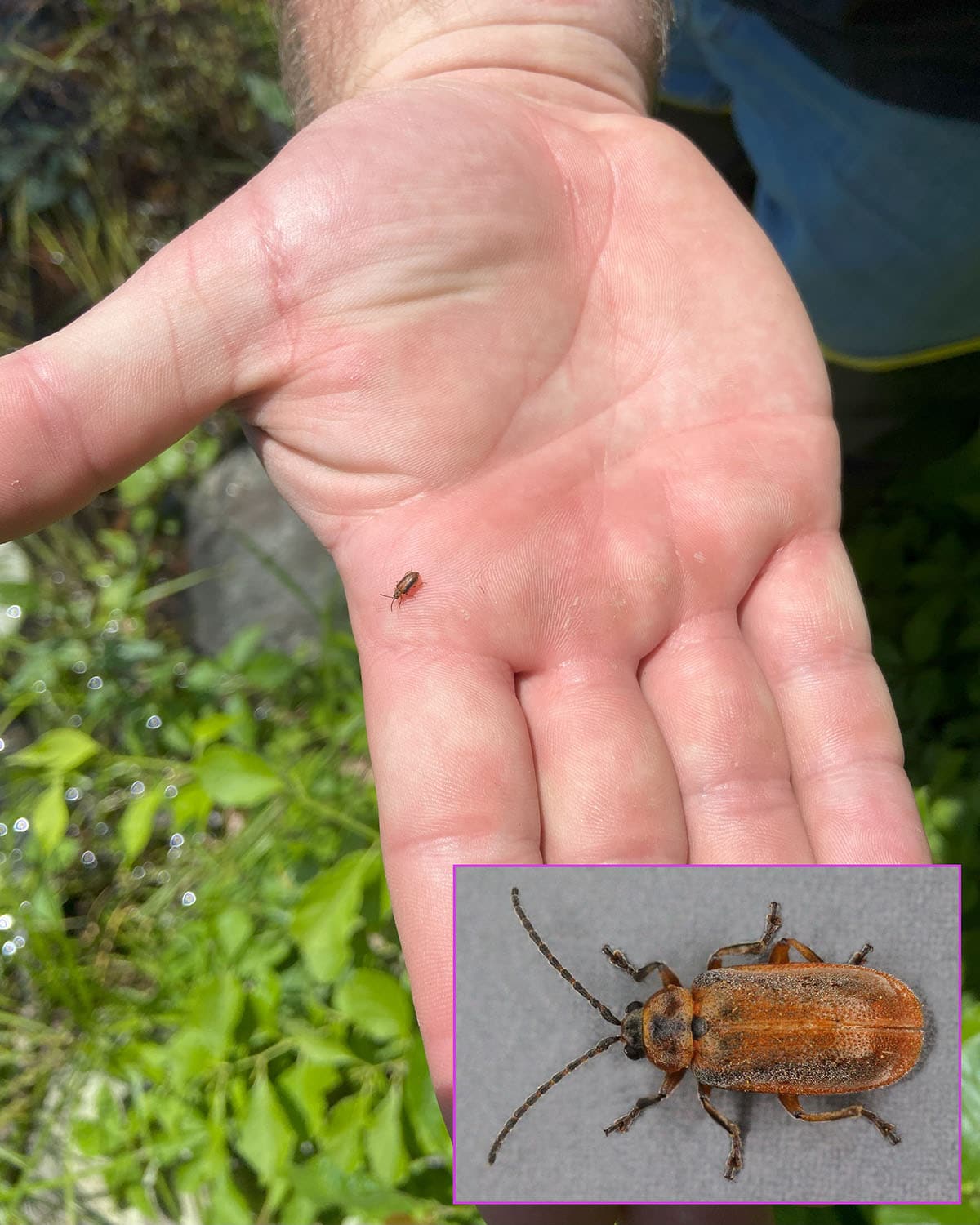
A black-margined loosestrife beetle (Galerucella calmariensis) pictured on the hand of NYC DEP Field Technician Chris Benincasa. Inset image credit: Wikimedia Commons Janet Graham
Purple loosestrife has a vast native range extending from the United Kingdom to Japan. It arrived in North America in the 1800s, both unintentionally in ship ballast water and with settlers who used purple loosestrife as an herbal remedy for gastrointestinal ailments. Purple loosestrife thrives in a variety of moist habitats including wetlands, marshes, wet meadows, bogs, stream banks, and lakeshores. Human activity and landscape-scale disturbance provides further opportunities for purple loosestrife to spread along canals, drainage ditches, culverts, reservoirs, roadsides, and irrigation channels.
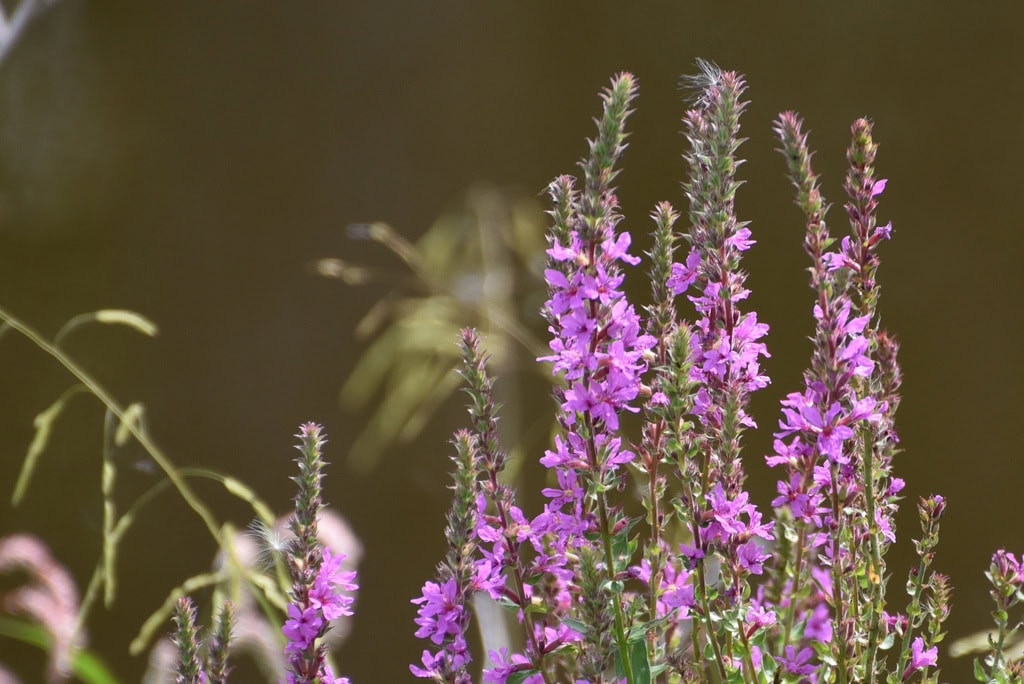
Although the sale of purple loosestrife (Lythrum salicaria) is prohibited in New York state, it may still appear in garden centers under the name European wand loosestrife (Lythrum virgatum). Nurseries may market L. virgatum as sterile alternative to L. salicaria, but research shows that these species hybridize easily, which can make purple loosestrife outbreaks worse. Image credit: iNaturalist user Julie Hengenius
Purple loosestrife spreads rapidly and outcompetes native wetland plants. Left unchecked, purple loosestrife can form dense monocultures that can stifle native plant growth. When native plant communities are replaced by invasive vegetation, the effects of biodiversity loss are felt throughout the ecosystem.
Although some native birds and pollinators make use of purple loosestrife stands, this species negatively impacts waterfowl, amphibians, turtles, and other aquatic wildlife (see the “Impacts” section).
Purple loosestrife can cause problems for humans, too. The dense stem and root systems of purple loosestrife colonies trap sediment, which can reduce water quality, obstruct water flow, and inhibit aquatic transportation.
Purple loosestrife is tough to eradicate. Because it frequently grows in and around water, herbicide options are limited. Manually removing purple loosestrife is difficult and often impractical for large, well-established colonies. An additional challenge to manual removal is that purple loosestrife can resprout from broken pieces of stem and root material.
In its native range, a combination of several insects naturally prevents purple loosestrife populations from growing too large. These natural predators were absent from North American ecosystems. Managing an invasive plant using host-specific “enemies” from its native range to damage or stress the invasive plant is called “biological control” or “biocontrol.” In the 1990s, two European leaf-eating beetles, a root-boring weevil, and a flower-feeding weevil were released throughout the U.S. and Canada.
Biocontrol organisms can create their own problems if they negatively impact non-target species, such as the native winged loosestrife (Lythrum alatum). Luckily, research showed that when given a choice between the two species, the introduced beetles prefer the invasive purple loosestrife.
The biocontrol program has been effective in New York and the black-margined loosestrife beetle is now found throughout Westchester County.
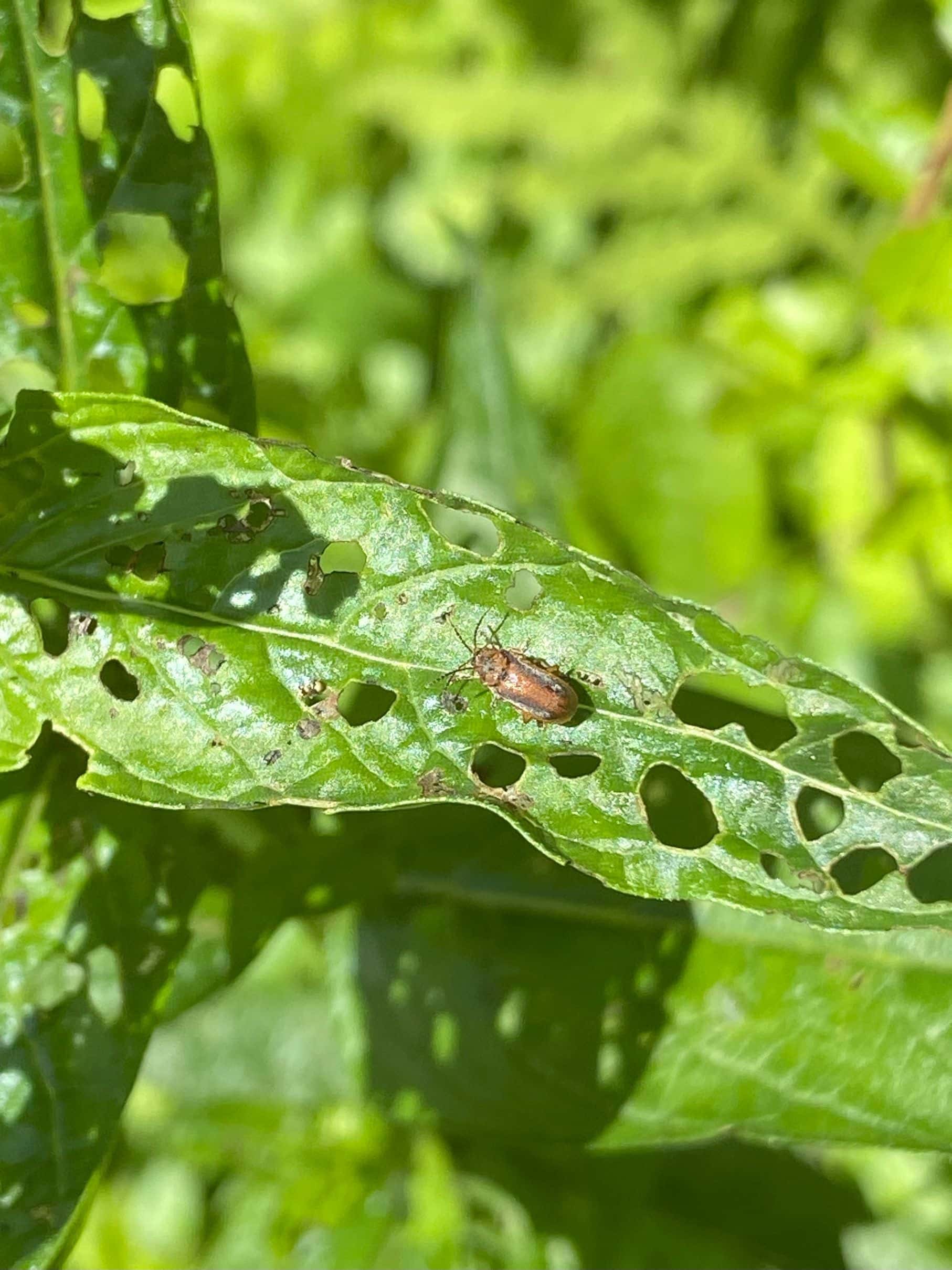
Purple loosestrife around Teatown Lake is visibly damaged by beetle herbivory.
The NYC DEP is responsible for managing and protecting New York City’s drinking water supply. To safeguard the New York City watershed, the NYC DEP works to protect healthy, functional wetland ecosystems and restore degraded wetlands throughout the state.
At a newly constructed wetland site with lots of purple loosestrife, the NYC DEP is striving to keep invasive species cover at 15% or less. To help achieve that ambitious goal, three interns from SUNY Ulster are hoping to jump-start the biocontrol beetle population at the new restoration site.
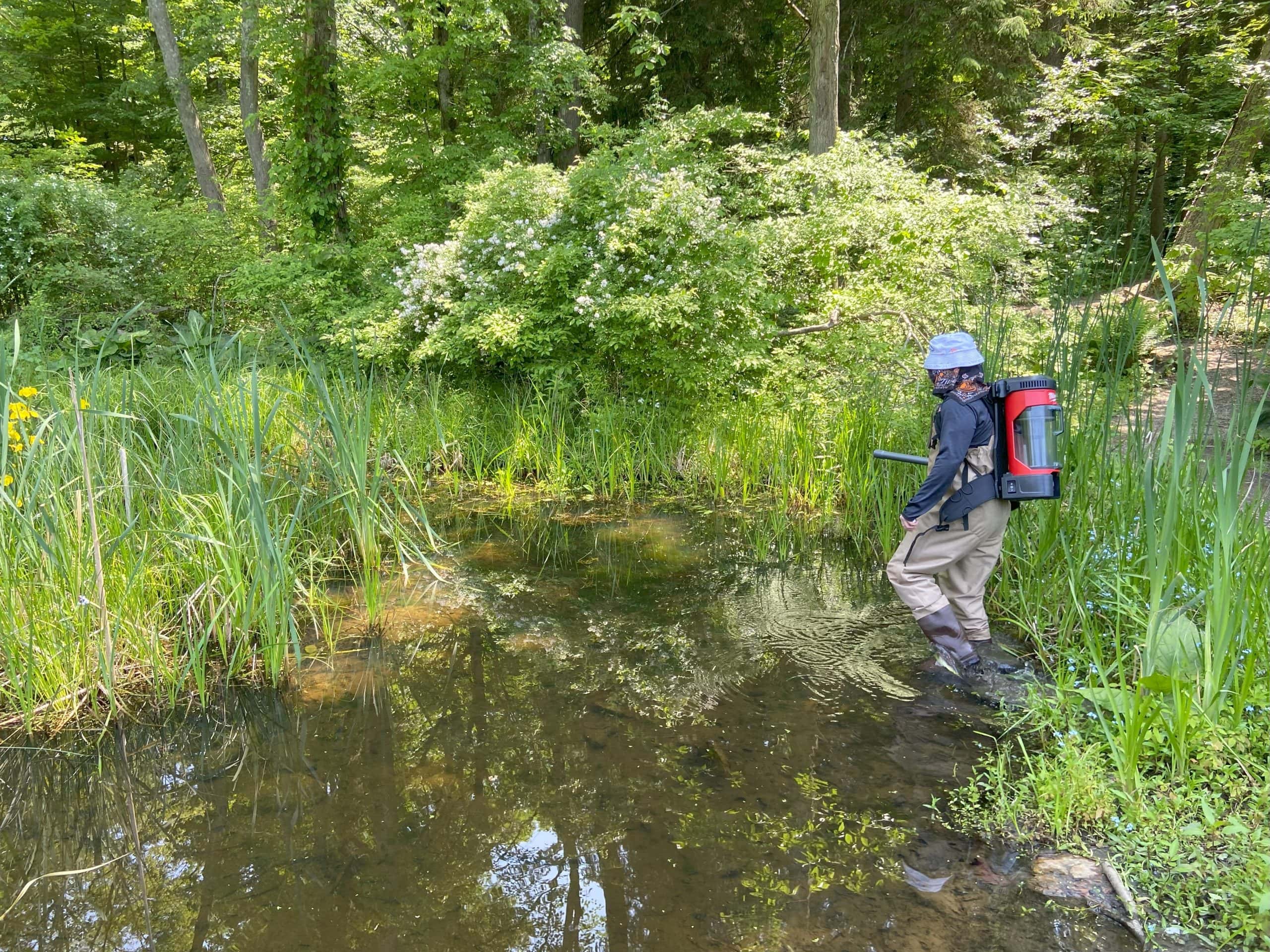
SUNY Ulster intern Dan Nekos heads into the wetland with a Milwaukee backpack vacuum. The vacuum is modified to hold beetles in a small mesh bag where they await counting.
In order to release enough beetles to make an impact on purple loosestrife, the interns are collecting beetles from several wetland sites in the Hudson Valley. There’s a research component to their work, too. The interns are testing three different collection methods: a battery powered backpack vacuum, a manual suction straw, and a funnel made from a 2-liter soda bottle.
With support from NYC DEP Biologist Meredith Taylor and Field Technician Christopher Benincasa, the interns use one of three methods to collect as many beetles as possible in a set amount of time. After the timed trial, the interns and NYC DEP staff count the number of beetles captured by each collection method. The NYC DEP team recently visited Teatown to collect beetles from wetland habitat around Teatown Lake.
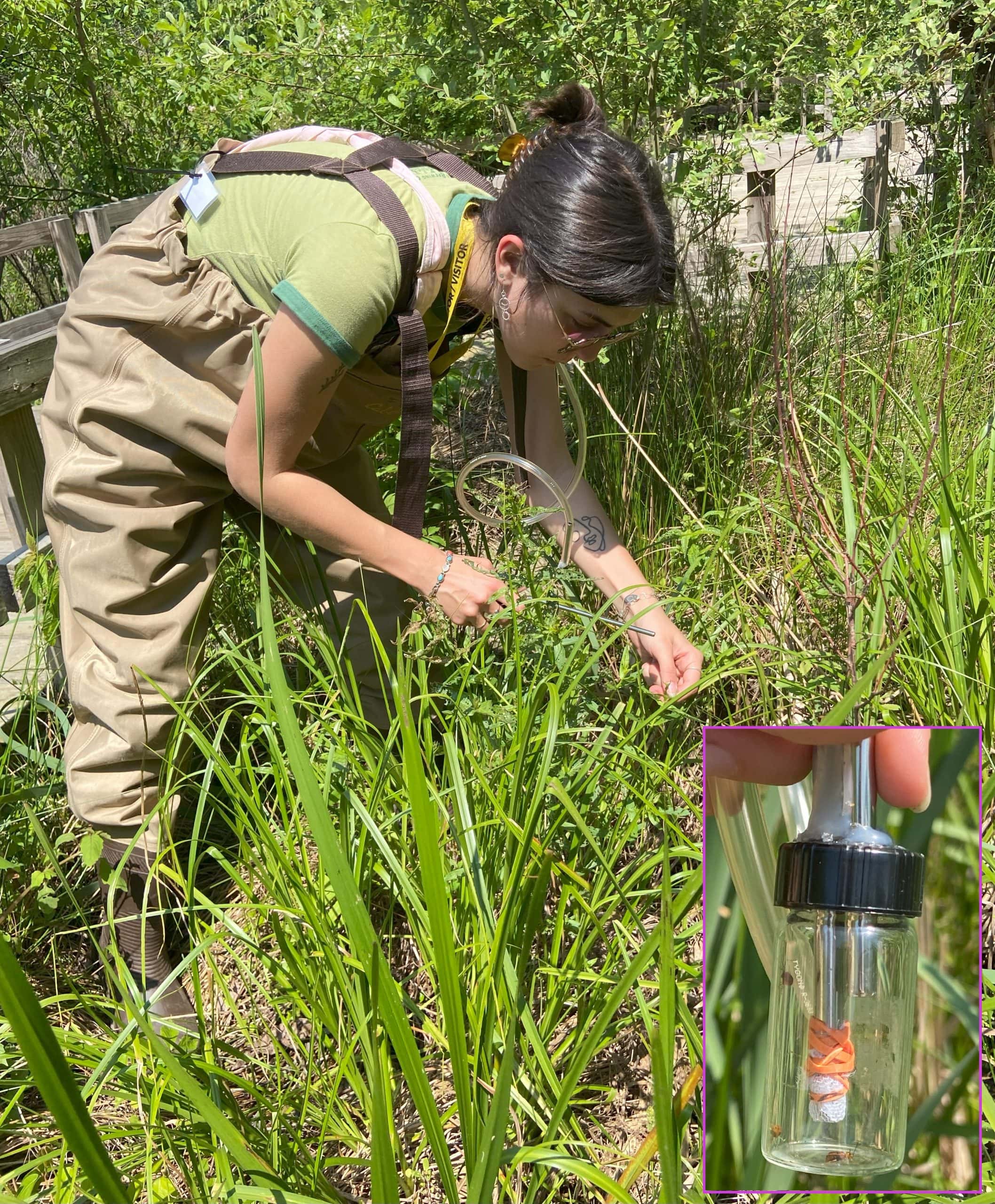
Using manual suction, SUNY Ulster intern Scarlett Hollinger traps beetles in a glass vial (inset). A filter prevents any accidental insect inhalation.
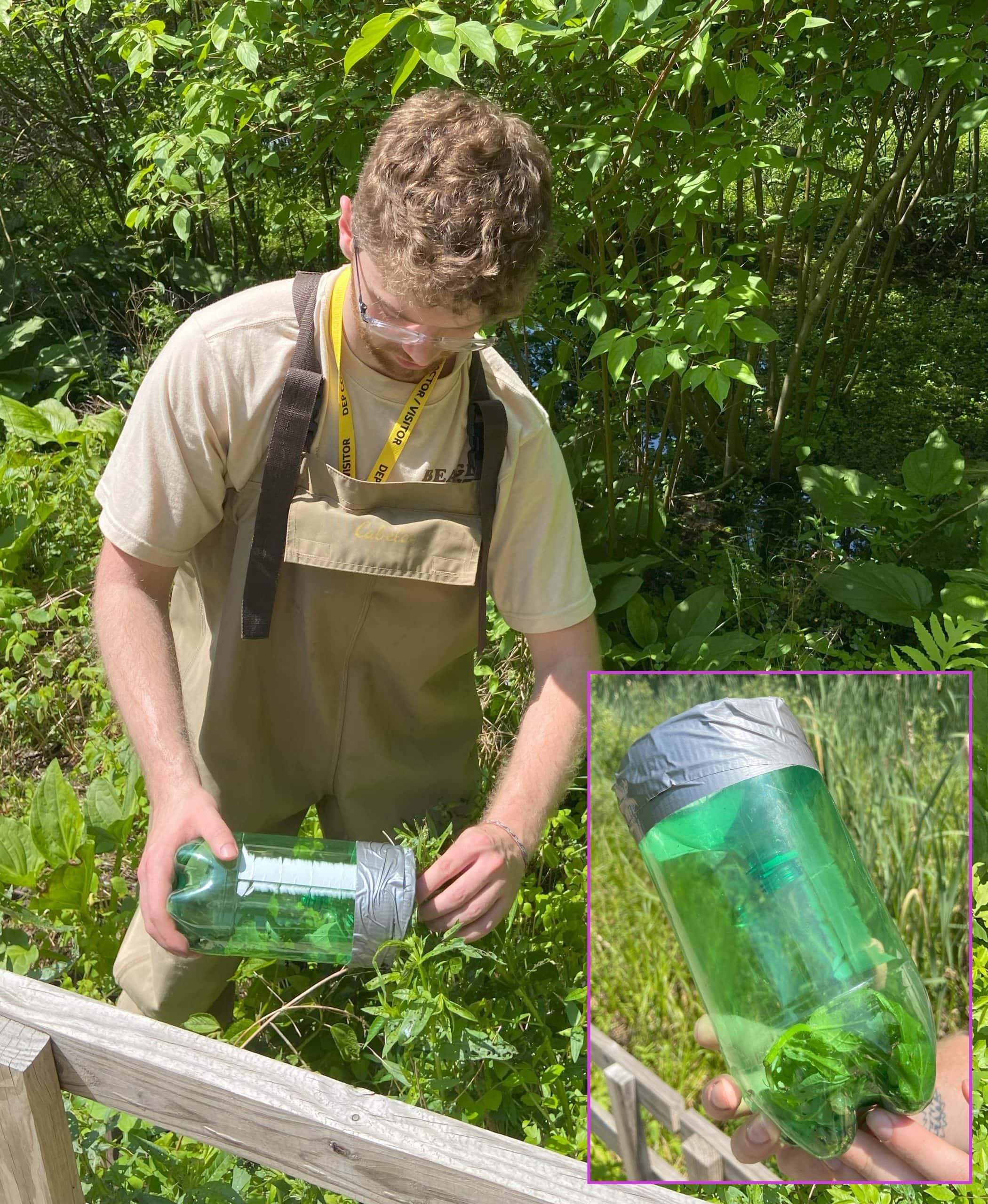
SUNY Ulster intern Sean Cornelison tests out the soda bottle tap-and-funnel method. This DIY option was recommended to the team by the local co-operative extension.
The interns will analyze data from the time trials and share results later this summer. Their research project will help other land managers make decisions about collecting and using the beetle at their own sites. Time and resources are often limited for restoration practitioners, so research projects that address practical questions are important. Teatown acts as a living laboratory, and we are eager to support more research initiatives like this one.
Visit https://nyis.info/ to learn more about purple loosestrife and other invasive species in New York.
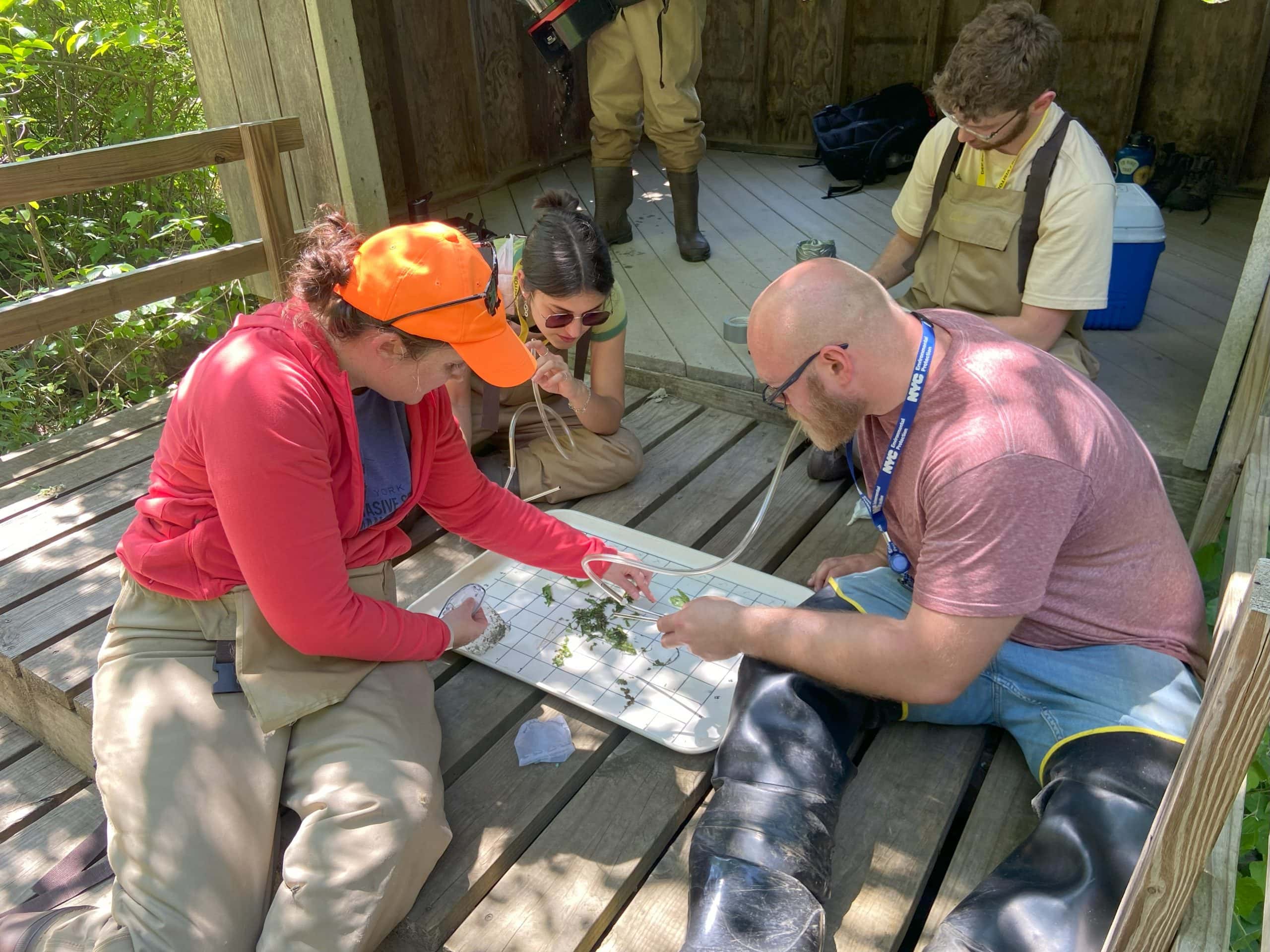
The NYC DEP team tallies how many beetles were captured by each collection method. The interns will analyze data from the time trials performed at Teatown and other wetland sites in the Hudson Valley.

ABOUT THE AUTHOR
Erin Snyder
Environmental Research Scientist
All blog photos were taken at Teatown by Erin Snyder, unless otherwise credited.
Leave a Reply