

Can we restore a forest from the outside in?
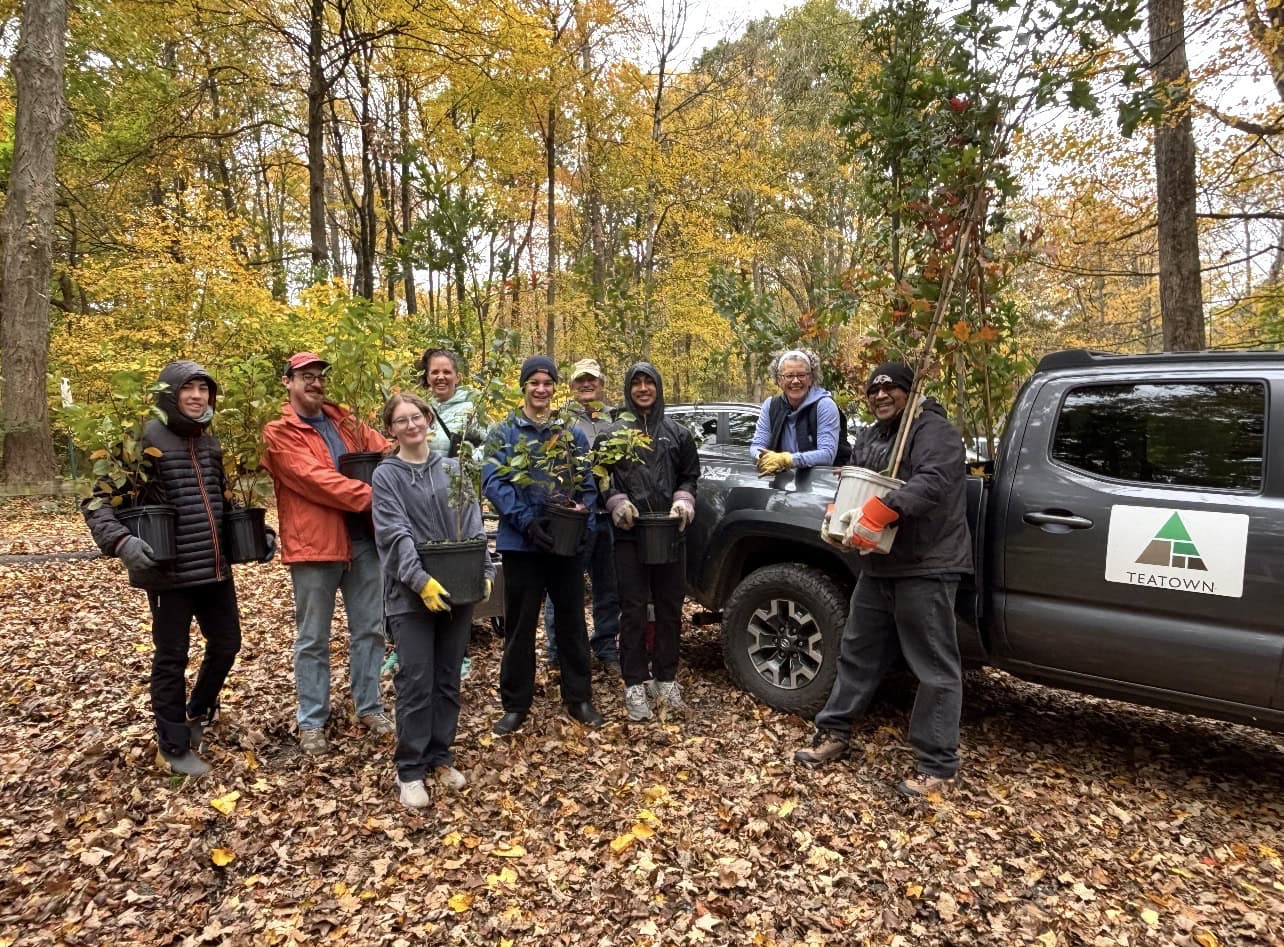
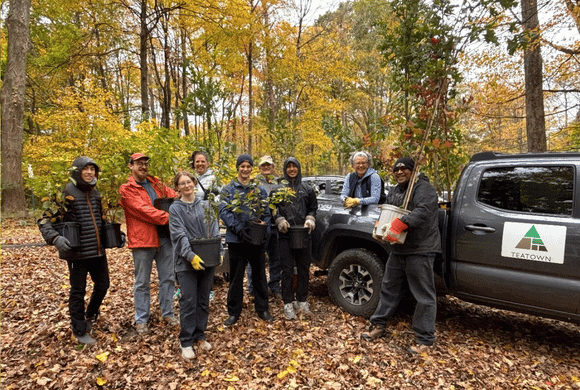
Thank you to the Teatown Volunteers that helped us plant our research plots this past weekend!
If you’ve walked the trails around Teatown Lake recently, you may have noticed fenced plots in the woods and along trail edges. These small study areas are helping Teatown’s science team explore a question with potentially big implications for conservation: Can the pathways that help invasive plants spread also help native plants gain ground?
A different approach to restoration
Invasive plants often spread along forest edges, hiking trails, roadsides, and streams, using these corridors to reach new areas. Nearby gardens and landscaped properties can also serve as sources of non-native plants that spread into natural habitats.
Restoration efforts commonly focus on removing invasive plants and replanting natives within habitat interiors. But invasive plants growing along surrounding edges and corridors can continue to spread inward, putting ongoing pressure on restored areas.
Teatown’s research asks whether those same routes could work in favor of native plants. By deliberately planting native species along habitat edges and corridors, could we encourage them to spread into the forest?
In other words, can we restore a forest from the outside in?
Putting the question to the test
Our science team has established the first study plots in woodland interiors and along trail edges near Teatown Lake. In each plot, the team has surveyed existing plant species and removed invasive plants. Native shrubs and herbaceous plants are now being planted in their place.
By tracking how these native plants spread, the team will investigate whether planting location can help restoration efforts reach beyond the areas directly planted.
The fences have an important job, too: keeping deer from eating the plants being studied.
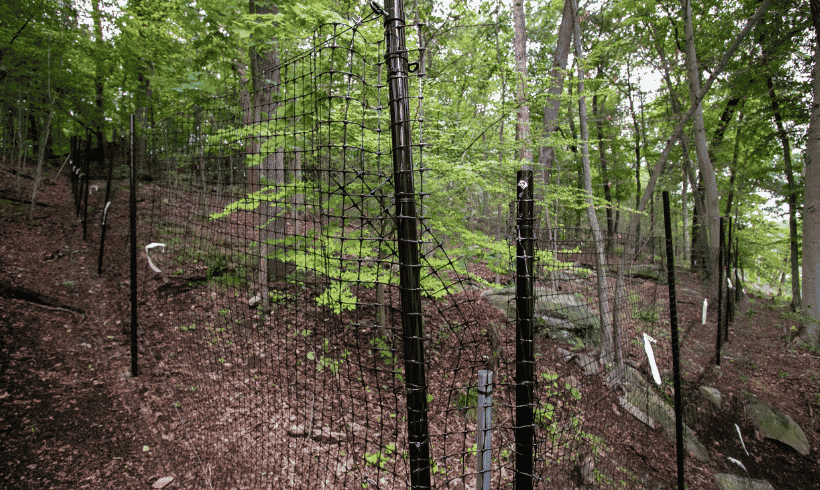
Fenced-in plots are being installed throughout the preserve.
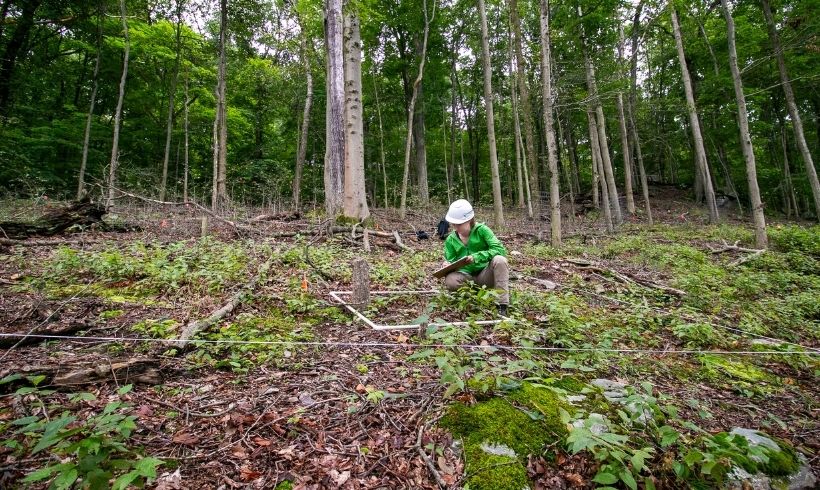
Teatown’s Research Ecologist, Alyssa Fowler, in the field collecting baseline data for the project.
Why this research matters
If this approach proves effective, it could help land trusts and other land stewards identify overlooked places where native plantings could make a difference. Forest edges, trail corridors, and neighboring properties might become starting points for native plants to spread into surrounding habitat.
That could offer a more effective, and potentially more affordable, way to support ecological restoration over time.
Give research room to grow
If you encounter a fenced study plot on your next walk, please leave the plants, fencing, and research materials undisturbed. Each plot is part of an ongoing investigation, and protecting it helps our team understand what works.
We look forward to sharing what we learn as this research grows.
Leave a Reply