

Beech Leaf Disease Research Moves into the Field
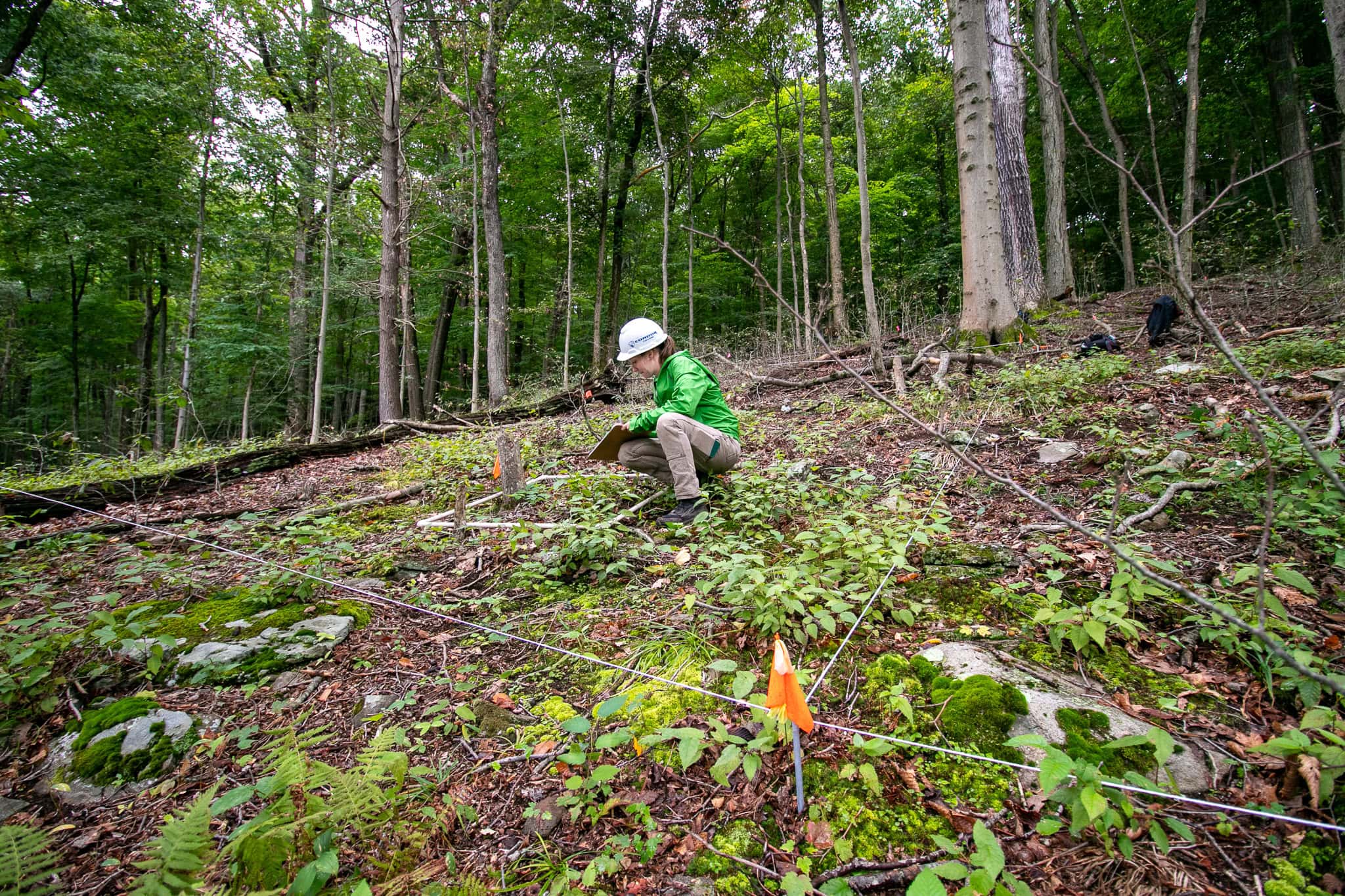
Teatown’s research into the future of forests affected by Beech Leaf Disease has moved from planning into field implementation. Across the preserve, research sites have been selected and mapped, baseline data are being collected, and deer-exclosure fencing is going up around experimental plots.
Why Beech Canopy Gaps Matter
Beech Leaf Disease is causing the rapid decline of American beech (Fagus grandifolia), an ecologically important canopy tree throughout northeastern forests. As infected trees die, they will leave openings in the forest canopy, allowing more sunlight to reach areas that were once deeply shaded.
These gaps could support the next generation of native trees and plants. But without intervention, the combination of increased sunlight and heavy deer browsing may instead allow invasive plants such as Japanese stiltgrass, garlic mustard, porcelain berry, and Japanese barberry to spread deeper into the forest.
Teatown’s three-year research project is examining practical, cost-effective ways to prevent that outcome and help native forest communities establish in anticipated beech canopy gaps.
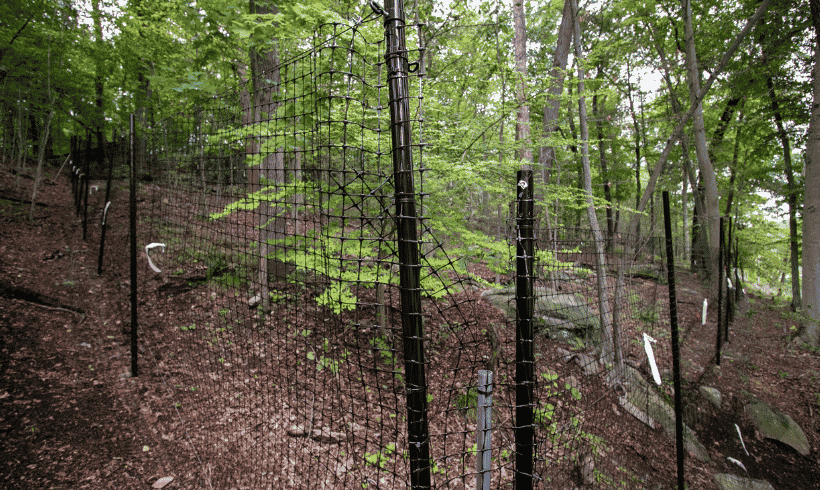
Fenced-in plots are being installed throughout the preserve.
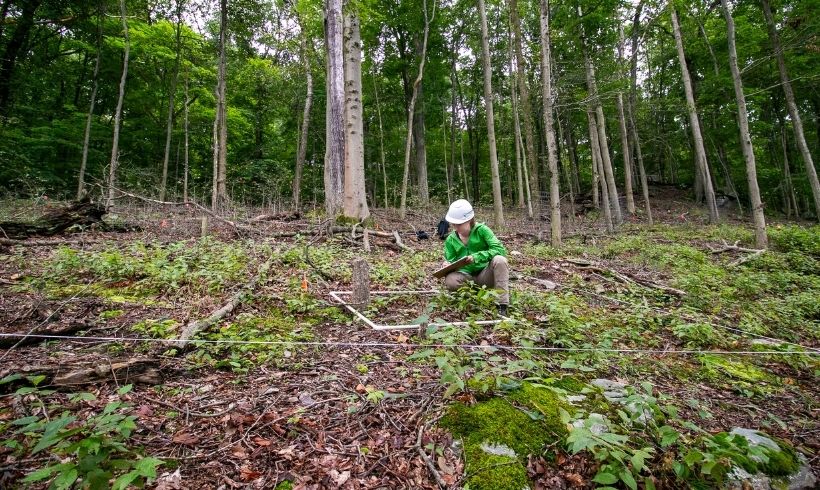
Teatown’s Research Ecologist, Alyssa Fowler, in the field collecting baseline data for the project.
Establishing the Research Plots
Before applying any treatments, researchers are documenting the existing conditions within each plot. This baseline research includes measurements of canopy cover and surveys of the trees, shrubs, herbaceous plants, and invasive species already present. These observations will provide the starting point against which future changes can be measured.
The fencing now being installed will protect selected plots from deer browsing. Beginning this fall, researchers will test several restoration approaches within the fenced areas: allowing vegetation to regenerate without planting, sowing a native forest graminoid seed mix, planting native trees and shrubs, and combining seeding with tree and shrub planting. Unfenced and unplanted plots will serve as controls.
Plant materials have already been purchased from three native plant nurseries, with planting planned for October and November.
Finding Practical Solutions
Over time, Teatown will compare how well native and invasive plants fare under each treatment while also tracking the labor and cost involved. The goal is to identify strategies that are both ecologically effective and realistic for land managers to implement.
The findings will help Teatown respond to changes already underway in our forest while providing useful guidance to land trusts and conservation organizations throughout the Northeast. The lessons may also apply to canopy gaps created by storms, insect outbreaks, and the natural loss of mature trees.
Building a More Resilient Forest
The fences and baseline surveys visible today are the groundwork for years of research. By studying these forest gaps before they fully develop, Teatown is working to ensure that the decline of American beech does not open the door to further degradation, but instead creates an opportunity to support a healthy, diverse, and resilient forest.
Leave a Reply