
Patching the Forest: Responding to Beech Leaf Disease at Teatown
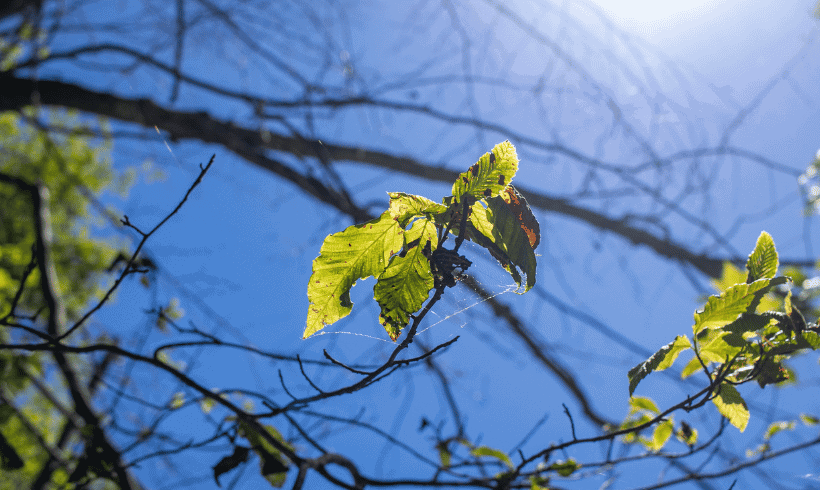
Across the Northeast, American beech trees are being threatened by Beech Leaf Disease, a fast-moving forest health issue that has become a major concern for land trusts, scientists, and land managers.
American beech is an important canopy tree in many regional forests, including here at Teatown. Its dense leaves create deep shade, helping define the character of the forest floor beneath it. Beech leaf disease, the result of leaf infection by a microscopic nematode, is threatening to irreversibly alter forest canopies as infected leaves shrivel and eventually die.
The disease typically kills beech trees within five to ten years, leaving behind sudden openings in the canopy. In a healthy forest, those openings can be opportunities for other native trees, shrubs, and plants to grow. But in forests already under pressure from deer browse and invasive species, those same gaps can quickly become entry points for non-native plants.
Species such as garlic mustard, Japanese stiltgrass, porcelain berry, and Japanese barberry thrive in disturbed areas with increased sunlight and are not palatable to deer. Without intervention, beech gaps could become steppingstones for invasive plants, allowing them to move deeper into forest interiors and alter the ecological balance of the woods.
That is the challenge Teatown researchers are preparing to address.
Finding the best way to “patch” a forest gap
Teatown has developed a research project focused on a practical question: when Beech Leaf Disease creates gaps in the forest canopy, what can land stewards do to help native plants recover and prevent invasive species from taking over?
In essence, we are looking for the best ways to “patch” these gaps.
The project will test different restoration strategies around beech trees already showing signs of Beech Leaf Disease. Researchers will compare how native and invasive plants respond over time under several management approaches, including deer fencing, native seed mixes, native tree and shrub plantings, and combinations of these treatments.
Just as important, the project will track the cost and labor required for each approach. For land trusts and conservation organizations managing hundreds or thousands of acres, restoration strategies need to be both ecologically effective and practical to implement.
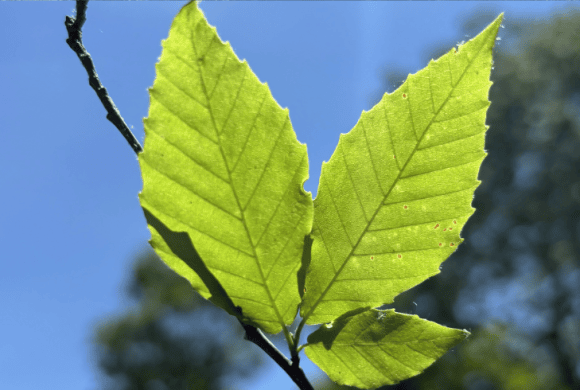
Healthy American beech leaf
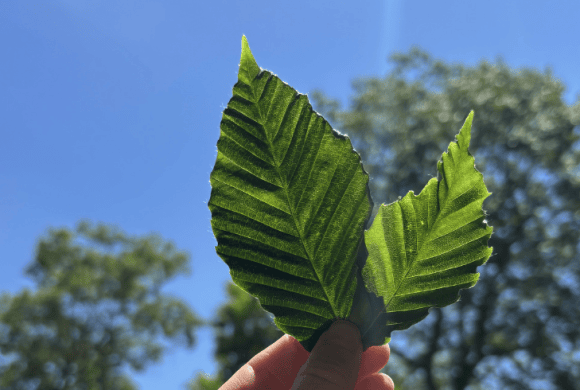
Infected American beech leaf showing “striping”
Why deer matter
In many Northeast forests, deer browse is one of the biggest obstacles to forest regeneration. Even when native seedlings are present, deer often eat them before they can mature.
By installing deer fencing around research plots, Teatown researchers can better understand how protecting young plants from browse affects the recovery of native species in beech gaps.
The goal is not simply to keep invasive plants out. It is to give native forest communities a fair chance to come back.
Growing local solutions
Another important piece of the project is native seed collection and propagation. Teatown plans to collect seeds from native plants already growing across the preserve and use them to grow locally adapted plants for restoration.
These locally sourced plants may be especially valuable because they are already suited to the conditions of our region. Over time, Teatown hopes this work can help identify which native species are most successful in beech gap restoration.
If resources allow, Teatown may eventually scale up propagation efforts to provide plant material for other land managers working on similar restoration projects.
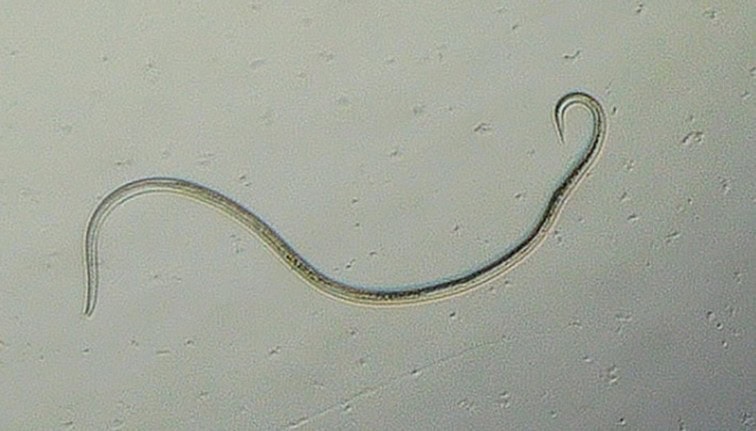
Beech leaf nematode. Image Source: University of Cornell
Research with regional impact
Teatown’s work on Beech Leaf Disease is not happening in isolation.
In 2022, Teatown co-founded the Beech Leaf Disease Coalition, a network of Lower Hudson Valley land trusts and land managers working together to share information and coordinate responses to the disease. Teatown is also an active member of regional conservation partnerships, including the Lower Hudson Partnership for Regional Invasive Species Management.
Through these networks, the results of this research can be shared with other organizations facing the same challenge. The goal is to create guidance that helps land trusts and land stewards across the Northeast make science-driven decisions about how to care for forests affected by Beech Leaf Disease.
The findings may also apply beyond beech trees. Canopy gaps are created by many forces, including storms, insect outbreaks, disease, and the natural aging of trees. Understanding how to restore these openings while resisting invasive species could help protect forest health in many different contexts.
Looking ahead
This research is designed as a multi-year project. In the first year, Teatown researchers will identify study plots, collect baseline data, install treatments, and begin monitoring. In the second and third years, they will continue collecting data, maintaining plots, analyzing results, and sharing findings with conservation partners.
The work will not end there. Forest recovery takes time, and Teatown hopes to continue monitoring these plots beyond the first three years to better understand which strategies lead to lasting success.
Beech Leaf Disease presents a serious challenge for our forests. But it also gives us an opportunity to ask questions, test practical solutions, and prepare for the changes already underway.
At Teatown, stewardship means more than responding to what we see today. It means looking ahead, learning from the land, and taking action to protect the future of our forests.
Leave a Reply